
How Many Coffees Can a Home Espresso Machine Make Back to Back?
A home espresso machine can usually make several coffees back to back, but there is no fixed drink limit that applies to every machine. For a typical household, two to four drinks in one session is a useful planning scenario, not a guaranteed maximum. Straight espressos are generally easier to serve in succession than lattes or cappuccinos because milk drinks add steaming time and demand more from the heating system.
The question to ask is not simply, “Can it make four coffees?” It is, “Can it make our four coffees without an awkward wait?” At Coffee Warehouse, we recommend choosing around your busiest regular session: count the drinks, note how many need steamed milk, and decide whether one person will prepare them all. A single-boiler machine can make successive drinks but switches between brew and steam temperatures. A heat-exchanger or dual-boiler machine is better suited to moving between espresso and milk without that changeover.
If you regularly make several milk drinks, the Profitec Pro 400 offers a heat-exchanger design that permits brewing and steaming at the same time. For a more involved home routine where independent brew and steam systems appeal, the Profitec DRIVE is a dual-boiler option. Neither comes with a universal promise of a particular number of drinks per hour. Your recipes and pace still matter.
What does “back to back” mean for espresso?
Back-to-back coffees are drinks prepared in one continuous session, with only the normal time spent grinding, brewing, preparing milk and cleaning between orders. Making one espresso now and another after lunch is different: the machine has ample time between uses, and no one is waiting for a drink.
We find it helpful to separate three questions that often get treated as one:
- Can the machine complete the drinks? A pause to heat or refill water does not necessarily stop you from finishing a batch.
- Can it maintain a comfortable pace? Waiting for a boiler to change temperature matters when guests are standing in the kitchen.
- Can you keep the drinks consistent? Grinder preparation, brew temperature, milk texture and serving order all affect whether the last coffee is as enjoyable as the first.
That distinction explains why an advertised maximum, even when one is available, rarely tells you enough about home use. A session of straight espressos has a different rhythm from a session of large milk drinks. The person making the coffee may be the limiting factor long before the machine is.
The four things that determine how many drinks you can serve
1. Whether the machine must switch between brewing and steaming
A traditional single-boiler espresso machine uses one boiler for brew water and steam. Those jobs require different temperatures, so milk drinks involve a transition. You can avoid switching back and forth after every cup by pulling your espresso shots first and steaming the milk afterward, but the shots will be waiting while you work. That can be fine for a couple of drinks and less convenient for a table of guests.
A heat-exchanger machine keeps steam available while brew water travels through a separate path. The Profitec Pro 400, for instance, has a 1.6 L insulated stainless-steel heat-exchanger boiler, PID control and an E61 brew group. Its ability to brew and steam simultaneously addresses the main bottleneck in a run of cappuccinos. Simultaneous capability does not mean you have to do both tasks at once. It means you do not need to wait for a single boiler to switch jobs each time.

A dual-boiler machine gives brewing and steaming separate boilers. On the Profitec DRIVE, PID temperature control adds brew-temperature adjustment, while flow control gives an experienced user another way to shape extraction. Those controls are not a substitute for good preparation, but the independent heating systems make a run of mixed espresso and milk drinks easier to organize. If you are weighing these designs, our guide to whether you need a dual boiler at home explores the trade-off.
2. What everyone actually orders
If everyone wants espresso, you repeatedly grind, prepare the basket and pull shots. If everyone wants a latte, you also need cold milk, a suitable pitcher, steam-wand cleaning and time to pour. An Americano adds hot water, which may require a separate kettle depending on the setup. These are different workloads even if each guest calls their order “one coffee.”
Before shopping, write down a realistic busy-session order. For example, imagine a household making one espresso, one Americano and two cappuccinos before leaving for work. The cappuccinos determine whether switching to steam will disrupt the sequence. If all four were straight espressos, the same single-boiler setup might feel considerably less demanding.
Serving size matters, too. More milk takes longer to heat and texture than a smaller portion. If you host often, think in terms of cups you serve, rather than the number of buttons a machine offers or the total number of coffees you drink across a day.
3. Whether water, beans and milk are ready
A machine can be capable of successive extractions and still stop the session because its tank needs refilling. Rinsing, flushing, steaming and making Americanos all use water beyond what ends up as espresso in the cup. On a super automatic, a full drip tray, grounds container or empty bean hopper can interrupt a run of drinks. Those interruptions are ordinary parts of using a home machine, not proof that the heating system is too small.
Check the water level before guests arrive. Have beans ready and, if you are making milk drinks, keep the milk refrigerated until you need it. It is worth checking your machine’s manual for its water, cleaning and operating instructions before trying to speed up a large batch. If you are deciding between a tank and a fixed water connection for your own kitchen, see our guide to direct-plumbed and water-tank machines.
4. How quickly the person preparing drinks can work
With a traditional machine, every fresh puck needs attention. You grind the coffee, prepare and tamp the grounds, brew, empty the basket and repeat. Milk work adds another cycle. Even when brewing and steaming can happen simultaneously, a person working alone may prefer to do them in a predictable order rather than juggle both at once.
A reliable grinder and an uncluttered workspace can make a bigger difference to a small gathering than an impressive capacity claim. For an espresso-focused setup, we carry dedicated grinders including the Profitec Twist SD54 Single Dose Grinder, Rocket Espresso Super Fausto Grinder and Breville Smart Grinder Pro. Our article on pairing a grinder with a prosumer espresso machine can help you think through that part of the workflow.
How each type of home machine handles a queue
These are design differences, not promises that every machine in a category will make a set number of drinks without pause. Model-specific heating, your recipes and the way you work all influence the experience.
Single boiler: a workable choice when milk drinks are occasional
A single-boiler machine can pull successive espresso shots. Its most noticeable delay comes when you move between brewing and steaming. If you mainly drink straight espresso, that compromise may barely affect your morning. If several people each want a cappuccino at once, the switch becomes a regular part of service.
To use a single boiler efficiently, prepare the cups and milk first, brew the shots, then change to steam mode and finish the drinks. Follow the machine’s instructions for returning it to brew temperature afterward. This approach reduces repeated switching, though it does mean planning the order in which drinks reach the table. A single boiler is not incapable of making coffee for guests; it simply asks for more patience and coordination.
Heat exchanger: less waiting between espresso and milk
A heat exchanger is compelling if several milk drinks are a normal part of your routine. It lets you keep brewing while steam is available, avoiding the brew-to-steam changeover of a single boiler. That is useful whether you actively brew and steam at the same time or prefer to alternate the tasks without waiting for a mode change.
The Pro 400 suits a household that enjoys traditional portafilter preparation and wants a smoother sequence when friends come over. Give the machine time to reach its operating state, and follow its instructions for group preparation and temperature management. An E61 group and heat-exchanger boiler are not shortcuts around learning your machine. They give you a different set of tools for handling the session. For a closer look at this format, read our heat-exchanger comparison featuring the Pro 400.
Dual boiler: independent brewing and steaming
A dual boiler is worth considering when you routinely serve multiple lattes or cappuccinos and care about how smoothly the whole session runs. Separate brew and steam boilers allow both systems to be ready for their respective tasks. You can keep attention on espresso preparation while milk steaming remains available, rather than building your workflow around a temperature switch.
The Profitec DRIVE Dual Boiler Espresso Machine is an option for that style of home bar. Alongside its separate boilers, it has PID control, a rotary pump and flow control. Its appeal is not that it eliminates grinding, tamping or cleanup. It gives a hands-on home barista more control and a less interrupted brew-and-steam workflow. If you are considering a longer-term upgrade, our Profitec DRIVE comparison examines that decision in more detail.

Super automatic: less hands-on work, with its own interruptions
A super automatic machine changes the question. Instead of asking how fast you can grind, dose and tamp each puck, you ask how the machine handles successive drink selections, refills, rinses and milk-system care. The convenience is especially useful when several people want different coffees but no one wants to act as the household barista.
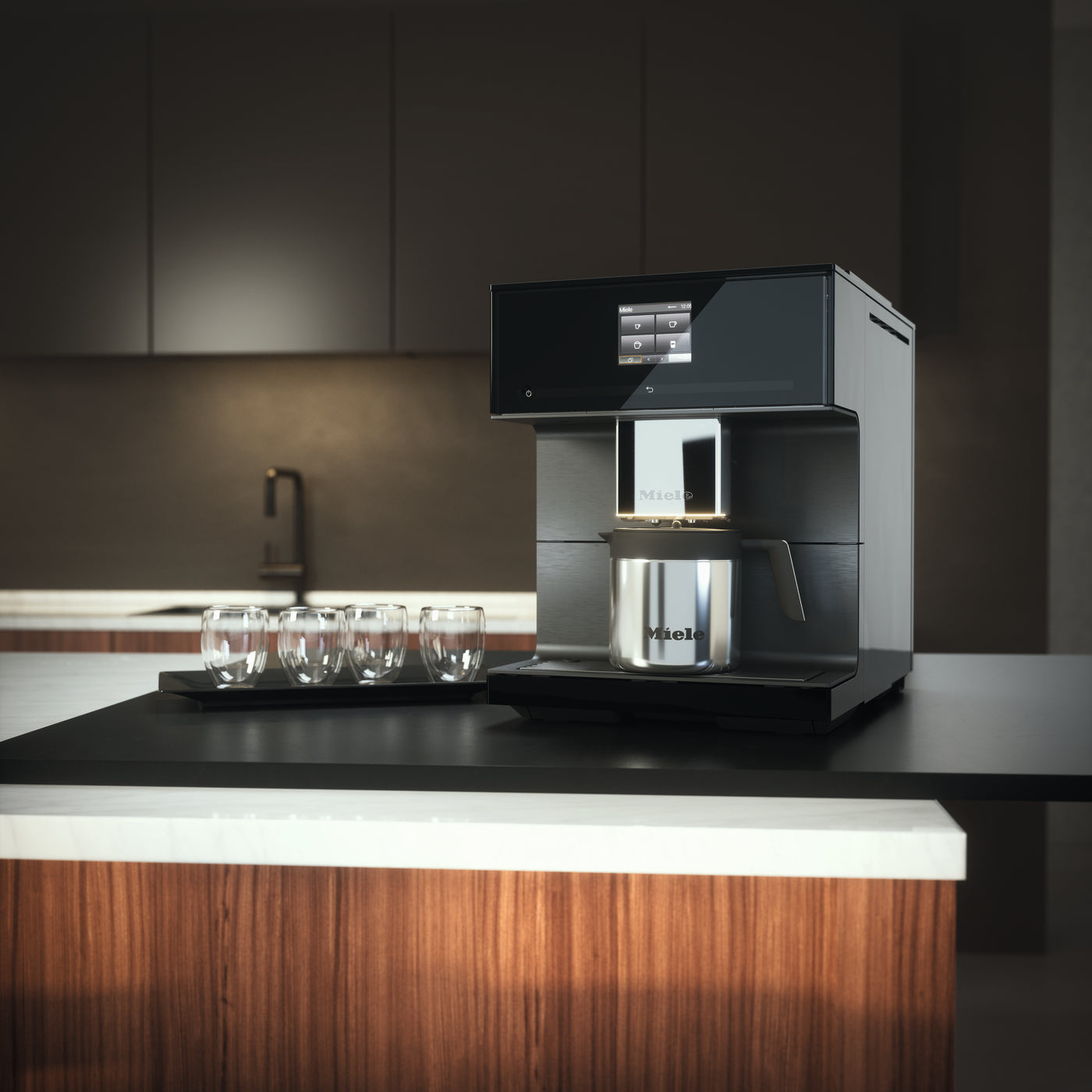
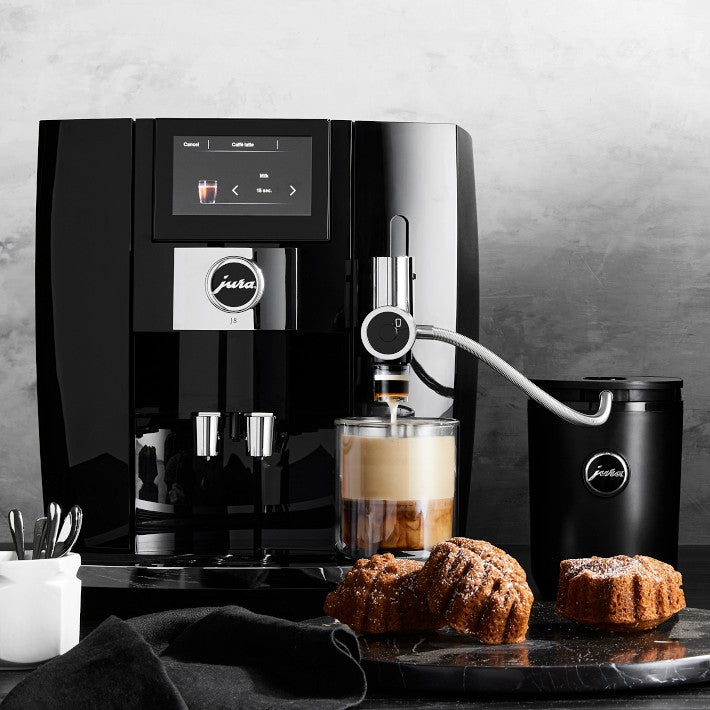
Coffee Warehouse carries super automatic options including the Jura ENA8 and Miele CM6360. When comparing machines for consecutive drinks, look beyond the menu: consider the drinks your household chooses, how the milk system fits into that routine, and the maintenance required after use. Automated preparation reduces manual work, but it does not make refilling, emptying or cleaning disappear. Our super automatic versus semi-automatic guide helps clarify which kind of involvement you want.
A simple way to plan your busiest coffee session
Rather than trying to convert boiler specifications into a theoretical drinks-per-hour figure, we suggest walking through the busiest session you expect to repeat. This makes the purchase decision much more concrete.
- Write down each drink. Include the espresso, cappuccino, latte and Americano orders you actually make. If guests choose freely, plan around the mix that tends to take the most work.
- Mark which drinks need steam. This quickly shows whether brew-to-steam switching will be a minor inconvenience or the central bottleneck.
- Decide who is making them. A single person cannot always take advantage of simultaneous brewing and steaming in the same way as two people working together. Choose the machine for a workflow you will enjoy using.
- Check your preparation space. Make room for the grinder, cups, milk pitcher, towel and a place to empty the portafilter. Keep refills close enough that an empty tank does not derail the session.
- Think about the last cup. If the last person regularly waits while the machine changes temperature or while you reset your workspace, decide whether that wait is acceptable. That answer is often more useful than an abstract drink count.
For example, imagine making four coffees on a weekend: two straight espressos and two milk drinks. A sensible sequence on a single boiler is to prepare the espresso portions first, then switch to milk steaming. On a heat exchanger or dual boiler, you can alternate between extraction and milk preparation more freely. Neither sequence is automatically better for every household. The better one is the routine you can repeat comfortably.
Best practices for serving several coffees without rushing
- Start when the machine is ready. Follow its warm-up and operating instructions rather than beginning a guest session the moment a light changes or a display turns on. Parts involved in brewing may need time to reach their intended operating state.
- Prepare the work area before the first shot. Set out cups, clean towels, a milk pitcher and your coffee. This cuts avoidable delays between drinks without forcing the machine to work faster.
- Use a repeatable espresso recipe. Keep your dosing and preparation method consistent. If a shot changes dramatically during the session, check the puck preparation, beans and grind before assuming the machine cannot keep up.
- Plan milk in manageable portions. Steam milk in a quantity you can texture and pour well. Trying to rush an oversized pitcher may save a step on paper but make the drinks less consistent.
- Clean the steam wand as you go. Wipe and purge it after milk use according to your machine’s instructions. Do not leave milk residue on the wand while you work through the next orders.
- Let programmed cycles finish. If a super automatic rinses, asks for water or prompts you to empty a container, address it rather than repeatedly trying to start another drink.
- Use appropriate water and maintain the machine. Water quality and scale affect espresso equipment over time. Follow your model’s guidance for filters, cleaning and descaling. Our guide to espresso water, hardness and scale explains why water deserves attention.
If steam weakens during a series of milk drinks, give the machine time to recover and consult its instructions. If you see a water or temperature warning, stop and address it. Those observations are more useful than pushing onward to meet an arbitrary target. Likewise, do not treat every change in espresso flow as a boiler problem: grind and puck preparation can change the result, even when the heating system is doing its job.
When a bigger machine is worth it, and when it is not
Upgrade for a repeatable problem, not for the highest hypothetical number of guests. If you usually make one espresso for yourself and occasionally a second for a partner, buying around a rare party may add complexity you do not need. A compact traditional machine and a grinder that fits your routine may be the more satisfying everyday setup.
If several people want milk drinks every morning, the calculation changes. Waiting for a single boiler to switch modes becomes part of your daily routine, not an occasional inconvenience. A heat exchanger such as the Pro 400 addresses that specific problem while retaining a hands-on espresso workflow. A dual boiler such as the DRIVE makes sense when independent brew and steam operation, temperature control and a more involved home-barista routine are priorities.
If the bottleneck is that nobody wants to grind, tamp and clean a portafilter for every person, a larger traditional machine may not solve it. A super automatic is the more relevant alternative because it changes how each drink is prepared. Choose between these categories based on who will make the coffee, not only how many people will drink it.
Frequently asked questions
Can a home espresso machine make ten coffees in a row?
It may be able to complete ten coffees in one session, but that does not mean ten drinks without pauses. The drink mix, water supply, steaming demands, grinder workflow and machine design determine how smoothly it goes. A single boiler calls for more planning when those drinks include milk. A heat exchanger or dual boiler avoids that particular brew-to-steam changeover.
How long should I wait between espresso shots?
There is no universal waiting period. Use the normal time required to empty and prepare the portafilter, and follow your machine’s operating instructions. If the machine indicates it is not ready or the shots become inconsistent, pause and investigate rather than assuming every model needs the same fixed interval.
Can I brew espresso and steam milk at the same time?
A heat-exchanger or dual-boiler design can support simultaneous brewing and steaming. The Profitec Pro 400 is a heat-exchanger example; the Profitec DRIVE uses separate brew and steam boilers. A traditional single boiler normally has to move between the two temperature ranges.
Do four cappuccinos put more strain on a machine than four espressos?
They require more work from both the machine and the person using it. Each cappuccino adds milk steaming and wand care to espresso preparation. A machine that feels quick for straight shots can feel slower when every order needs steam.
Is boiler size the best way to compare back-to-back performance?
No. Boiler design explains important differences, but size alone does not tell you how a machine will fit your session. Consider whether brewing and steaming can run independently, how you manage water and milk, and how much hands-on preparation you want to do.
Would a super automatic be faster for a household?
It can reduce hands-on preparation because the machine handles more of the drink-making process. It can still pause for refills, rinsing or container maintenance. If convenience is the priority, compare the complete routine, including milk cleanup, rather than assuming automation guarantees uninterrupted service.
What if I mostly make Americanos?
Think about how you will add hot water as well as how you will pull the espresso. If you use a separate kettle, the espresso machine is not doing all the work. If your setup dispenses hot water, check its instructions and your water supply when planning several drinks. Our Americano machine guide covers the everyday considerations.
When should I move beyond a compact espresso machine?
Consider it when a recurring queue of milk drinks makes temperature switching or steam availability frustrating, or when you want a different level of control over your espresso. If the problem is simply occasional hosting, better preparation and a more deliberate serving order may be enough.
Choose for the busiest session you actually have
There is no single back-to-back coffee limit for a home espresso machine. For many households, the practical question is how comfortably the machine handles a session of two to four drinks. Straight espresso is relatively simple to repeat; consecutive milk drinks expose the differences between single-boiler, heat-exchanger and dual-boiler workflows. Water, grinding and cleaning shape the experience as much as the heating design does.
If you want to match a machine to your usual drink queue, Coffee Warehouse can help you compare traditional and super automatic options, grinders and maintenance products around the routine you plan to use. Browse our coffee machines and home espresso equipment, or ask us about the workflow you have in mind.
Shop Appliances